
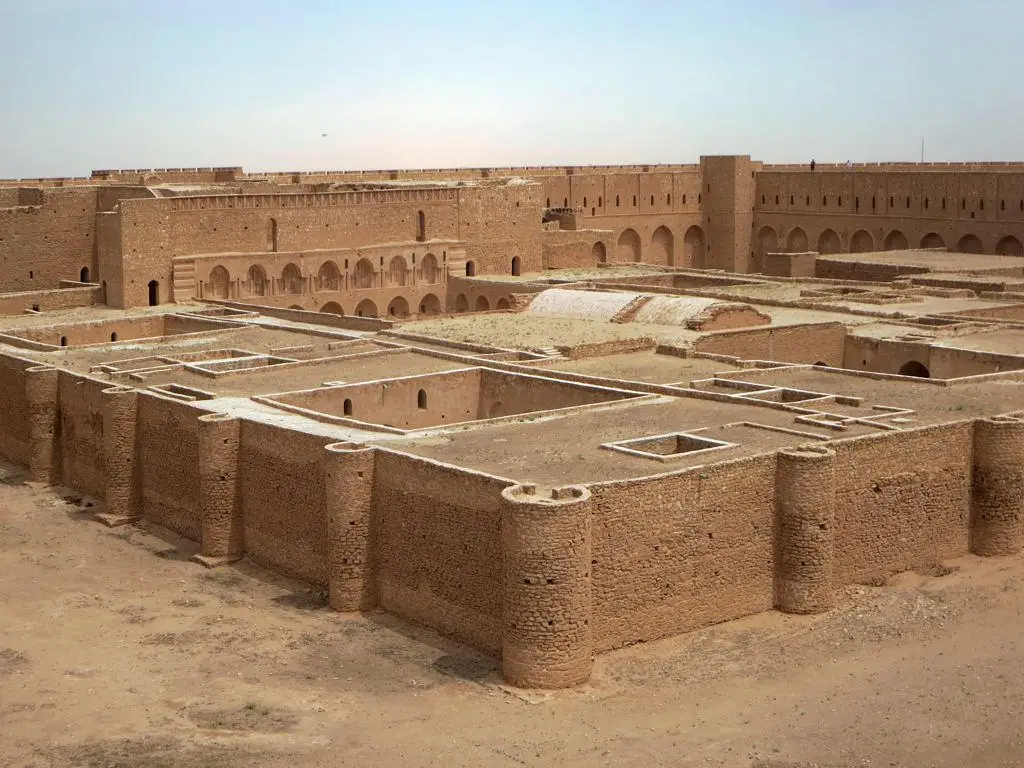
Al Ukhaidir Fortress
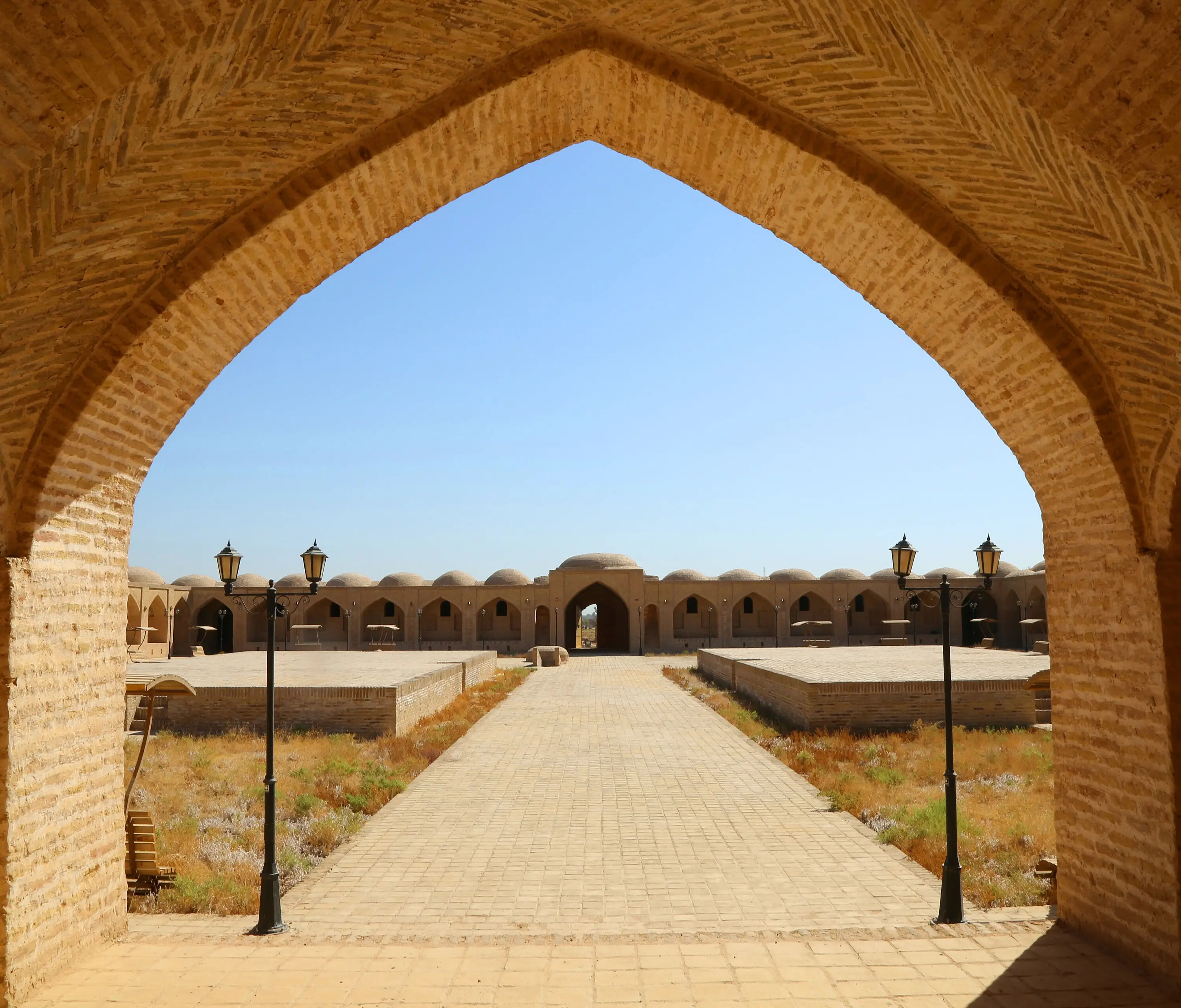
The Al Ukhaidir Fortress stands majestically in the desert of Karbala in central Iraq, fifty kilometers southwest of the city, and about 192 kilometers southwest of Baghdad, making it one of the greatest standing Islamic monuments in Iraq and one of the most prominent tourist destinations in the Middle East.
Historians believe the fortress was built in the early Abbasid era by Isa ibn Musa, uncle of Caliph Al Mansur, as excavations have revealed pottery and glass artifacts dating back to the second and third Hijri centuries (eighth and ninth centuries CE). It is said that its name comes from the greenness of the land on which it stands.
The palace is distinguished by its rectangular shape within an impregnable fortress measuring approximately 175×169 meters. Its unique architecture combined Sassanian and Byzantine styles—its windows and decorations closely resemble those of Taq Kasra (the Arch of Ctesiphon), and the capitals of its marble columns are carved with Byzantine ornamentations of leaf motifs—to the point that it is considered the finest standing Arab building, manifesting the grandeur of early Islamic architecture.
The fortress includes an original mosque within its structure, as well as harem quarters, halls, and various facilities, in addition to an ancient bathhouse discovered buried under the ruins, considered one of the most important discoveries at the site. The fortress drew the attention of researchers since the visit of orientalist Gertrude Bell in 1909, and has hosted cultural and artistic activities since 1972. It was then inscribed in 2000 on UNESCO's heritage lists in recognition of its exceptional architectural and historical value. Its standing ruins continue to receive visitors today, telling them a story of centuries of glory and architectural creativity.
Hear the full audio story — free in the app
Get app