
Ramadi
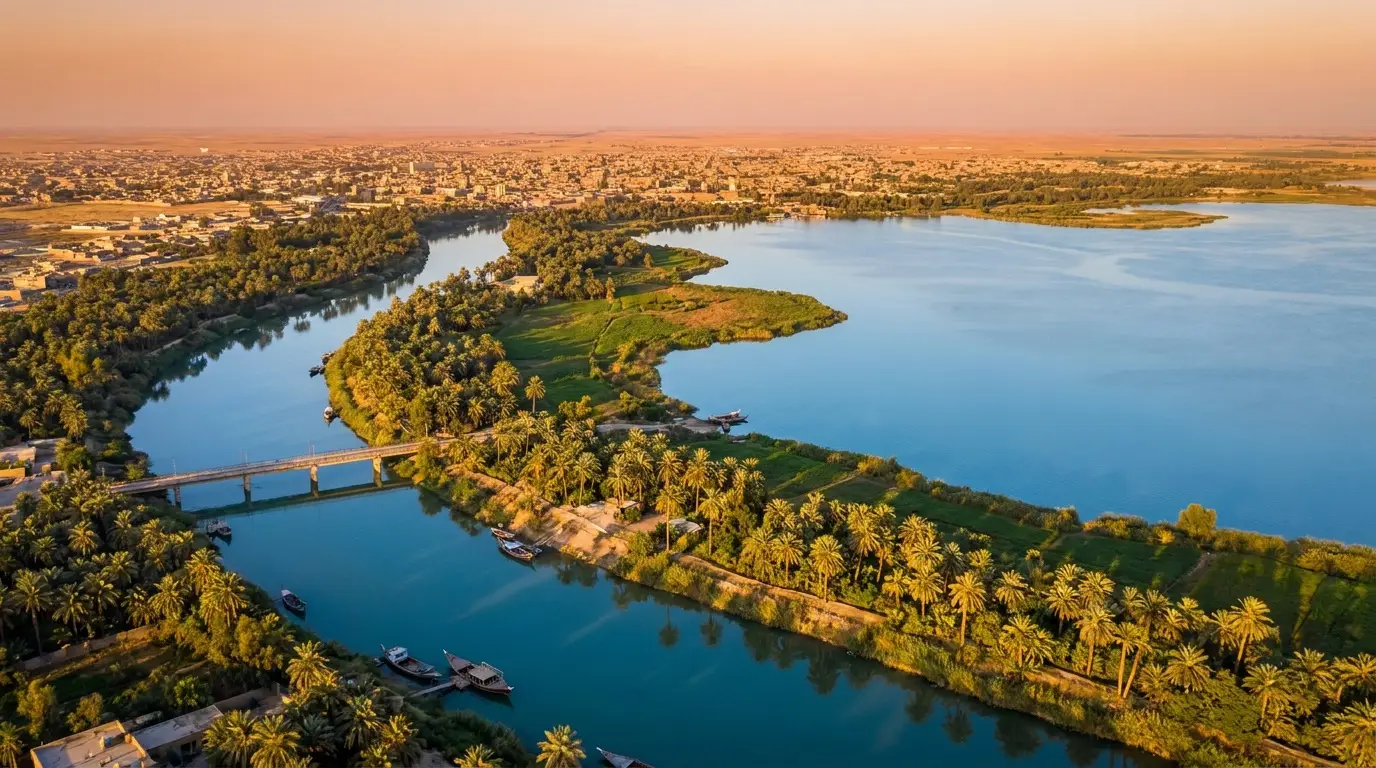
Euphrates river city slowly rebuilding amid date palm groves.
About Ramadi
Ramadi sits on the south bank of the Euphrates in central-western Iraq, about one hundred and ten kilometers west of Baghdad. As the capital of Anbar, the country's largest governorate by area, it is the administrative and commercial heart of a region that stretches across the western desert toward the Syrian and Jordanian borders. The city of around six hundred thousand is framed by the river, by extensive date palm groves and irrigated farmland, and by the broad Lake Habbaniyah a short drive to the east. Ramadi suffered very heavy damage during the conflict of 2014 to 2017, when much of the central city changed hands more than once, and a substantial portion of its infrastructure was destroyed during liberation operations. Reconstruction since then has been steady if uneven, and the markets, riverside cafes, and main thoroughfares have largely returned to daily life.
Ramadi through history
The Ramadi area has been inhabited for millennia, and ruins from successive Mesopotamian, Sasanian, and early Islamic periods are scattered along the Euphrates corridor. The modern city was founded in 1869 by the Ottoman governor Midhat Pasha, intended to assert imperial control over the tribes of the western desert and to anchor a planned settlement of the region. During the First World War, the area was the scene of significant fighting between British and Ottoman forces, including the Battle of Ramadi in 1917. Through the twentieth century Ramadi developed as a regional center for agriculture, trade with the Gulf and the Levant, and later as a base for Iraqi armed forces. The opening decades of the twenty-first century brought repeated waves of conflict, particularly the two battles of 2004 and the events of 2014 to 2017, both of which have profoundly shaped the city's contemporary identity.
- 600,000
- 1869
When to visit
The most comfortable months in Ramadi run from November through March, when daytime highs are mild and the desert and river landscapes are at their most pleasant. Spring is short and warm, with green fields along the Euphrates and migratory birds at Lake Habbaniyah. Summers are very hot and dusty, with daytime highs frequently above 45 degrees Celsius and occasional sandstorms sweeping in from the western desert.
Top places in Ramadi
What to eat in Ramadi
Anbar cuisine is anchored in the foods of the western tribes and the Euphrates valley. Grilled lamb and chicken, slow-cooked stews thickened with okra and tomato, hearty bread baked in clay tannour ovens, and rice dishes flavored with raisins and almonds are common at family tables. Freshwater fish from the Euphrates, often prepared masgouf-style, is widely available in riverside restaurants. Dates from the surrounding groves, fresh and dried, accompany tea throughout the day and feature in many desserts.
Getting there
Ramadi has no commercial airport, and travelers arrive overland from Baghdad in roughly one and a half to two hours via the main highway, traffic and checkpoints permitting. Shared and private taxis link the city with Fallujah forty kilometers downstream, with Hit and Haditha to the northwest, and with smaller desert towns further west. The closest international airports are Baghdad International (BGW) and, for those crossing from Jordan, Amman's Queen Alia (AMM), which is connected to Ramadi by long-distance road services.
Getting around
Within Ramadi, most travelers rely on local taxis, which are inexpensive and easy to flag along main streets. The riverside areas and the central markets can be explored on foot during cooler hours, while excursions to Lake Habbaniyah, Hit, or Haditha are usually made by hired car. Roads in Anbar are generally well paved along the main corridors, although secondary roads can be rough and dusty after the desert winds. Travelers are advised to keep documents accessible at checkpoints and to plan journeys to arrive in towns well before dark.
Safety
Ramadi has improved markedly since 2017, and central districts function much as other Iraqi cities, with markets, schools, and offices fully operational. Checkpoints around the city and along the highway from Baghdad remain a routine part of travel, and visitors should carry identification at all times. Some outlying districts and parts of rural Anbar are still being cleared of unexploded ordnance and are best avoided without a knowledgeable local guide. Travelers should monitor current advisories before visiting.