
Amarah
Quiet Tigris town at the edge of Iraq's storied marshlands.
About Amarah
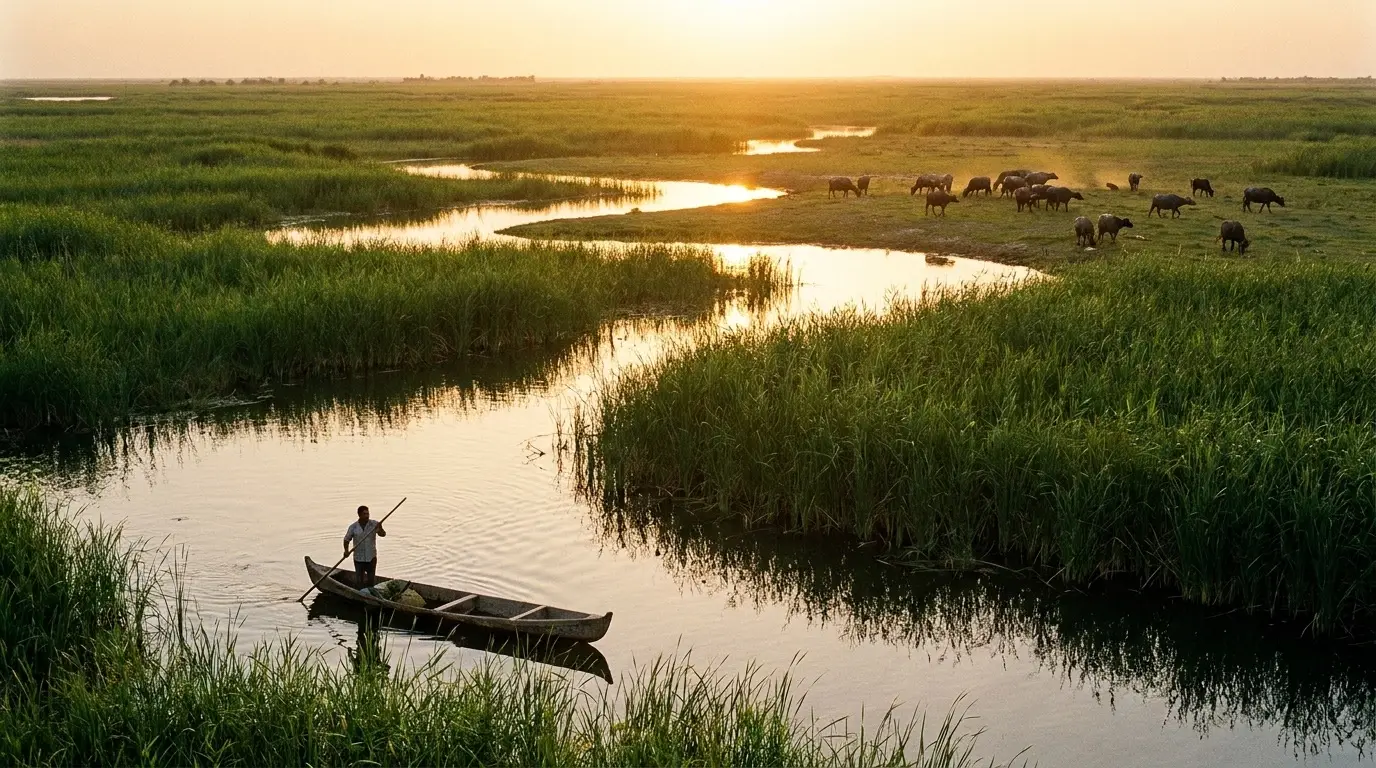
Amarah lies on the Tigris in southeastern Iraq, about three hundred and seventy kilometers downstream from Baghdad and roughly halfway between the capital and Basra. As the seat of Maysan Governorate and a city of around four hundred and thirty thousand, it functions as the administrative and commercial center for a region defined by its proximity to the Mesopotamian Marshes. The town was laid out in the mid-nineteenth century by the Ottomans as a garrison and river port, and traces of that planned grid remain visible in the older streets near the corniche. Date palm groves frame the city, and the wide Tigris dominates daily life, with small ferries and traditional flat-bottomed boats still working the water. Travelers come to Amarah mainly as a gateway to the marshes, where Marsh Arabs, known as the Maadan, have lived for thousands of years in reed houses among the waterways, herding water buffalo and weaving distinctive mudhif guesthouses from bundled reeds.
Amarah through history
The area around Amarah has been settled since Sumerian times and lies near the ancient cities of Lagash and Girsu, whose rulers contributed key chapters to early Mesopotamian history. The modern town itself was founded in 1861 by the Ottoman governor Namik Pasha, deliberately placed to assert imperial control over the Tigris trade route and the marshland tribes. Under the British Mandate in the early twentieth century, it served as an important river port and was the scene of significant fighting during the First World War campaign in Mesopotamia. The twentieth century brought irrigation projects, oil discoveries to the south, and the catastrophic draining of the marshes by the Iraqi government in the 1990s, which displaced much of the Maadan population. Since 2003, restoration efforts and international recognition have brought renewed attention to the region's ecological and cultural heritage.
- 430,000
- 1861
When to visit
The best months for visiting Amarah and the surrounding marshes run from late October through April, when temperatures are moderate and the wetlands are at their most navigable after winter rains. Migratory birds, including pelicans, herons, and kingfishers, are abundant in winter and early spring. Summer is extremely hot and humid, with mosquitoes among the reeds, and is best avoided.
Top places in Amarah
What to eat in Amarah
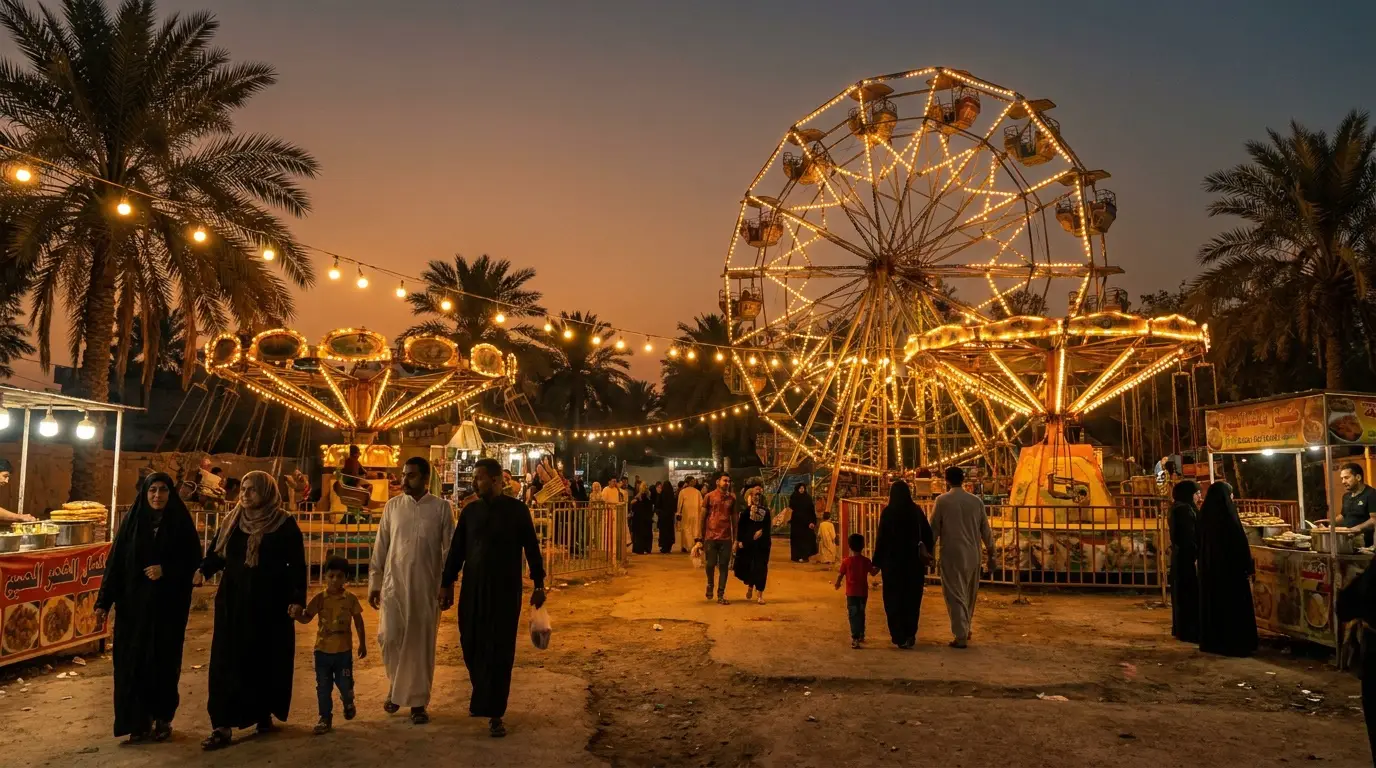
Amarah's cuisine is rooted in the marshes and the Tigris. Masgouf grilled carp is a regional staple, often prepared simply with salt and tamarind by riverside cooks. Buffalo yogurt and the rich clotted geymar made from buffalo milk are particularly prized, served at breakfast with bread, dates, and honey. Rice dishes flavored with marsh herbs, grilled river shrimp, and dolma feature on many tables, and traditional flatbreads baked in clay tannour ovens accompany most meals.
Getting there
Amarah does not have commercial air service, and most visitors arrive by road from Baghdad, Basra, or Najaf. Shared taxis and private cars cover the route from Baghdad in roughly five hours and from Basra in around two and a half. The closest major airports are Basra International (BSR) to the south and Najaf International (NJF) to the west, both around two hundred kilometers away.
Getting around
The town itself is compact, and most central destinations are walkable from the corniche. Taxis are inexpensive, with fares typically negotiated rather than metered, and tuk-tuks are common in the side streets. For trips into the marshes, travelers usually arrange a local guide and boatman in advance through contacts in Chibayish or with operators based in Basra and Baghdad. Boat journeys among the reed channels and floating villages can be arranged for half-day or full-day outings.
Safety
Amarah and Maysan Governorate are generally calm, and the southern provinces are among the more settled parts of Iraq for visitors. Occasional local protests over services or employment can affect main roads, and travelers heading into the marshes should arrange a known local guide and confirm their itinerary in advance. Standard advice on water, sun exposure, and mosquito protection applies, particularly during warmer months.